Fieldnote 04 · Company and reflection
Sunday at human pace
Leave enough room for a conversation, a familiar ritual and a small look back. The weekend does not need a grand finish to be worth keeping.
- 5–60 minutes
- Solo or shared
- No scorekeeping
Make an invitation with edges
“Would you like tea between three and four?” is easier to answer than “We should spend the day together.” Name the activity, likely duration and any practical details that matter. Say whether there are steps, where someone can sit and whether they need to bring anything. A clear ending can make a visit more comfortable for people managing fatigue, care responsibilities, transport or limited social energy.
Ask whether a mostly screen-free visit would suit the other person. Do not collect phones, demand explanations or assume everyone can turn off alerts. Someone may need a communication app, a care update or a quiet break with a familiar device. You can still share a conversation while allowing those needs. If meeting in person is not possible, a phone call can be the human connection the plan was meant to make room for.
Give company a light structure
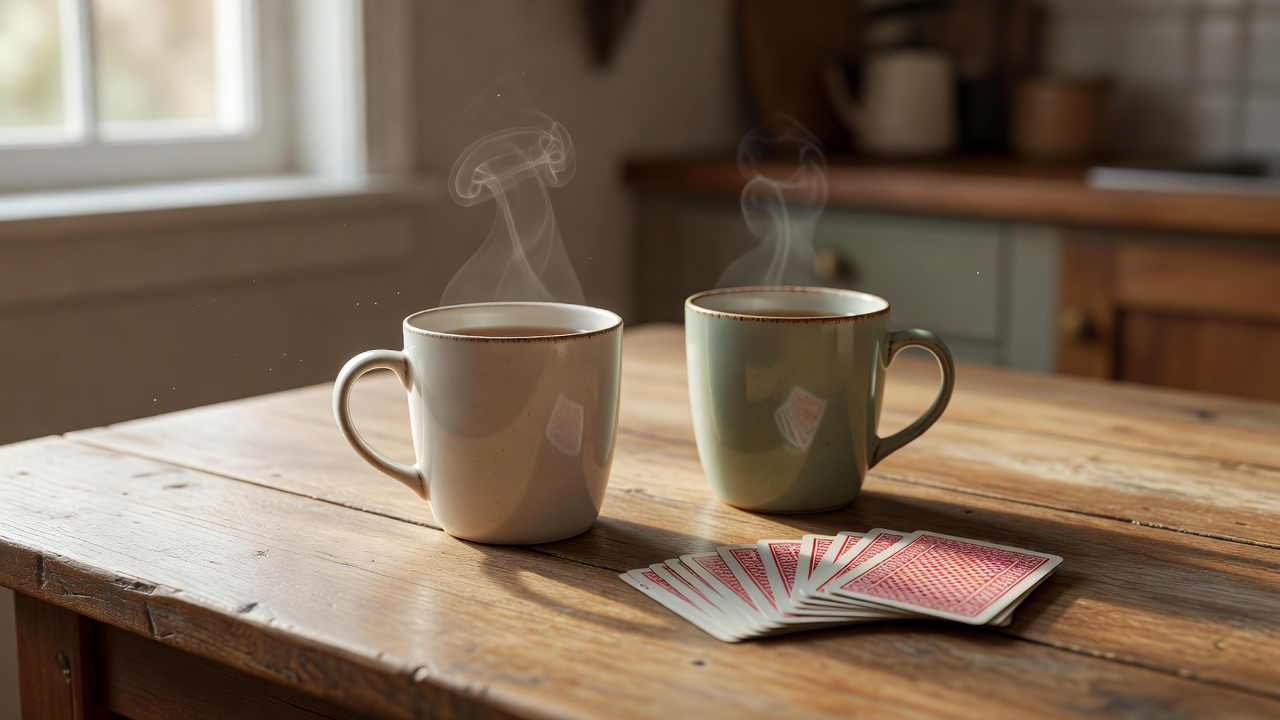
Set out a pack of cards, a simple puzzle, a book of pictures or a few objects with a story attached. A shared activity gives pauses somewhere comfortable to go. Explain a game before starting and choose one that people can leave without spoiling the whole afternoon. Cooperative sorting, taking turns reading or looking through an old recipe collection may suit the group better than competition.
Small kit: cups · something to drink · cards or paper · a clear place to sit.
For advance inspiration, The Big Lunch offers ideas around shared meals and neighbourly connection. Creative Lives is another starting point for finding participatory creative activity. Check arrangements directly before attending anything. Your own plan can remain much smaller: two people, one drink and permission to leave when they need to.
Let a solo Sunday count
Time alone is not the failed version of a shared plan. Return to the same chair with a book, make a small pot of tea or take a familiar route when it suits your energy. Repetition can remove the need to keep choosing. If silence feels unwelcome, use radio, an audiobook or music without making yourself watch a display. This guide is about replacing an automatic habit, not eliminating every electronic object.
You might borrow the scale of a modest essay or a single poem. The Book of Delights by Ross Gay is one real example of attention given to ordinary things; Mary Oliver’s poetry is another possible companion. Neither is a required reading list or a promise about how you will feel. Use a writer you already enjoy, or choose no reading at all. Sitting comfortably can be an activity without supporting evidence.
Notice without grading
Ask three short questions: What did I enjoy? What made the plan awkward? What would make it easier next time? Answer in a sentence, a few marks or a conversation. Avoid turning the reflection into a total of hours resisted. The most useful detail might be that the library seat was comfortable, that you needed lunch earlier or that the craft materials took too long to put away.
If you used your phone more than expected, be specific rather than critical. Perhaps a bus change required navigation, a relative needed support or the chosen activity simply was not interesting. Each explanation suggests a different adjustment. None requires declaring the whole weekend unsuccessful. A pleasant twenty minutes still belongs to you even if the rest of the day was busy, online or difficult.
Leave one useful thing ready
Choose one part worth repeating and make its next appearance easy. Return the cards to a reachable drawer, put the library return date on your usual calendar or keep the short route note in a bag. There is no need to schedule every future Sunday. A small visible cue is enough. If the activity did not suit you, put it away without turning it into a personal verdict.
Re-enter the coming week in the way your responsibilities require. You might check messages, prepare work equipment or call someone back. Use screens deliberately where they help, and leave optional browsing until you actually want it. A screen-free interval is not a retreat from ordinary life; it is one way of giving ordinary life a little more variety. Keep the part that made room, and allow next weekend to be different.